
What Does a Set Carpenter Do, and Do You Need One?
Direct Answer
Set carpenters, also called set builders or scenic carpenters, build the scenery and structures a show is staged on: platforms and risers, facades and walls, custom set pieces, stairs and ramps, and the finish work that makes a stage look like the design. Count on one when anything on your stage has to be built or fitted rather than assembled from a rental inventory, and usually not if you are using standard decks and risers. Where a stagehand moves and assembles gear that already exists, a carpenter fabricates and fits. On corporate work that means a branded set built to the room. On concert and festival work it means decks, risers, and scenic elements built to the stage. The carpentry call is booked separately from general labor because the work needs tools, materials, and someone who can read a drawing and build to it.
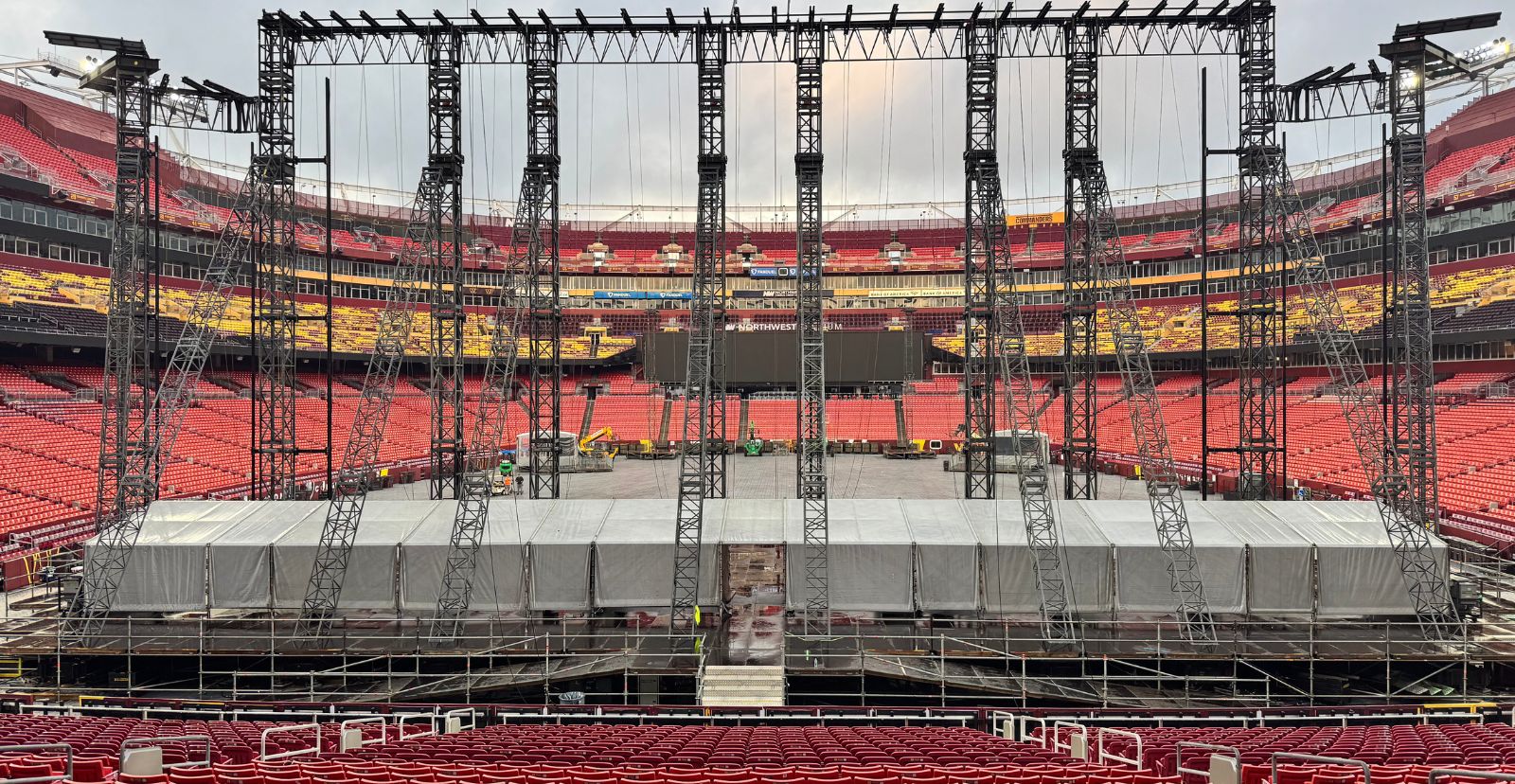
Quick Decision Guide
| If your production involves... | Your call generally needs... |
|---|---|
| Standard stage decks and risers from a rental inventory | Stagehands to assemble, usually no carpenter |
| A custom set, facade, or scenic wall built to a design | Set carpenters for fabrication and fit |
| Stairs, ramps, or platforms at non-standard sizes or heights | A carpenter to build and secure them |
| Scenic finish work: paint, cladding, trim, branded surfaces | Scenic carpenters and finish crew |
| A set that has to travel and rebuild at each stop | Carpenters on the build, and a crew that knows the set on the road |
Key Takeaways
- Carpenters fabricate. Stagehands assemble. If the piece exists and bolts together, it is a labor call. If it has to be built, cut, or fitted to the room, it is a carpentry call.
- The drawing is the job. A set carpenter works from the design, and the skill is turning a drawing into something square, level, and safe to walk on.
- Scenic work has two phases. Shop build, where pieces are fabricated ahead of time, and site build, where they are assembled, fitted, and finished in the room. Scoping both is what keeps the site build short.
- Anything people stand on is a safety item. Platforms, stairs, and ramps built on site have to hold weight and meet the venue's expectations, which is why this is not general labor.
- Carpentry runs early in the sequence. Set pieces go in before the departments dress them with lighting, video, and audio, so a carpentry call that runs late holds everyone behind it.
Shop Build, Site Build
The work splits between the shop and the site. In the shop, carpenters fabricate: cutting, framing, cladding, and assembling set pieces so they can travel and go together fast. On site, they build and fit: platforms leveled to an uneven floor, a facade scribed to a wall, stairs cut to the exact rise, and the finish work that hides seams and hardware.
During the build, carpenters also solve the problems the drawing did not anticipate. A ballroom column where the set was supposed to go. A stage deck an inch lower than the plan. A doorway the largest piece will not fit through. Carpentry is where those get fixed on the day.
After the show, strike for carpentry means breaking down the set for transport or disposal, which is its own task and its own time.
Build It, Assemble It, Hang It
Stagehands assemble what exists. Rental decks, risers, and staging systems are designed to go together with hands and standard hardware, and that is stagehand work.
Set carpenters build what does not exist yet, or fit what exists to a space it was not designed for. Tools, materials, and a drawing.
Riggers hang things. If a scenic piece flies, the carpentry call builds it and the rigging call hangs it, and the two coordinate on the hardware and the weight.
On small productions one crew may cover all of it. On large ones these are three departments with three schedules.
Tools, Skill, and Timing
Three reasons. The tools and materials are different from a labor call, so the crew arrives equipped differently. The skill is different, because building a level platform on an uneven floor is not something a general hand does well without experience. And the timing is different, because carpentry sits early in the build sequence and often has a shop phase before the site phase.
A production that folds carpentry into the general labor number usually discovers the difference at load-in, when the set is not going together and the hands are waiting on someone who can fix it.
Step-by-Step Guide
Drawing to Finish Work
-
The design comes in. Drawings, dimensions, finishes, and how the set breaks into pieces for transport. The carpentry call reads it against the venue.
-
Shop fabrication. Pieces that can be built ahead get built ahead, so the site build is assembly and fit rather than construction from scratch.
-
Site prep and layout. Positions get marked, the floor gets checked for level, and anything the drawing did not anticipate gets identified now.
-
Structure goes up. Platforms, risers, stairs, and framing, built square and level and secured.
-
Scenic surfaces go on. Facades, walls, cladding, and set pieces fitted to the structure and to the room.
-
Finish work. Seams, trim, paint touch-ups, hardware hidden, edges made safe. This is what separates a set that looks built from one that looks designed.
-
Handoff to the departments. Lighting, video, and audio dress the set. Carpenters stay available for adjustments during rehearsal.
-
Strike. The set breaks down for transport or disposal, in reverse, usually on the same clock as everyone else.
Examples
These are typical shapes for common jobs, not quotes from past projects.
A sales kickoff with a branded set built to the ballroom. Typical crew: shop-built scenic walls and a presenter platform, with a carpentry call on site to assemble, level, fit to the room, and finish before lighting and video dress it. The site day is short if the shop phase was done right.
A tour with custom risers and scenic pieces that travel. Typical crew: carpenters building drum and keyboard risers at non-standard heights and scenic elements that pack into the truck, then a smaller call at each stop to fit stairs and platforms to that venue's stage.
A museum gala with a stage built inside an atrium. Typical crew: a carpentry call fitting platforms and a facade to a room with columns, uneven stone, and nothing square, where most of the work is making the drawing fit the building rather than the other way around.
Frequently Asked Questions
Do I need a carpenter if I am using rental stage decks?
Usually not. Standard rental decks and risers are stagehand work. You need a carpenter when something has to be custom: a non-standard height, a shape that does not exist in the inventory, or a scenic finish on top of the structure.
What is the difference between a set carpenter and a stagehand?
A stagehand assembles gear and staging that already exists and is designed to go together. A set carpenter builds what does not exist yet, or fits what exists to a room it was not designed for, working from drawings with tools and materials.
What is scenic carpentry?
The fabrication and finish of the visible set: walls, facades, set pieces, and the surfaces that make a stage look like the design rather than like staging. It overlaps with set building and is often the same crew.
Can the set be built ahead of time?
Most of it, and it should be. Shop fabrication ahead of load-in is what keeps the site build to assembly and fit. A set built entirely on site takes longer and runs into more surprises.
Who is responsible for platforms and stairs being safe?
The carpentry call builds them to hold the load and to the venue's expectations, and the production is responsible for having qualified people do it. This is one of the reasons carpentry is not folded into general labor.
Does the carpentry call work with the rigging call?
When a scenic piece flies, yes. Carpentry builds it to the weight and hardware the rigging call needs, and the two coordinate before anything goes up.
How long does a set build take on site?
It depends on how much was shop-built and how well the room matches the drawing. A well-prepared set goes together in a fraction of the time a site-built one takes, which is why the shop phase matters.
Do you handle scenic strike and disposal?
Yes. Strike for a set is its own task, breaking pieces down for transport if they travel or for disposal if they do not, and it is scoped with the rest of the strike call.