
What Does a Stagehand Do?
Direct Answer
A stagehand is the general labor position on a production, responsible for the physical build of a show: decking stage, running cable, moving and assembling gear, hanging fixtures, and breaking all of it back down at the end. Loaders and pushers are specialized versions of the same call. Loaders work the truck, unloading and reloading in an order that keeps the build moving. Pushers move cases between the dock and the deck. On most jobs these are booked as one labor call and tiered by experience, with the hands who need judgment placed where judgment matters.
Quick Decision Guide
| If your load-in involves... | Your labor call generally needs... |
|---|---|
| Trucks arriving and departing on a schedule | Loaders working the dock and the truck pack |
| A long push from dock to stage, or multiple rooms | Pushers moving cases between positions |
| Deck build, cable runs, fixture hangs, assembly | Stagehands on the build itself |
| Departments working at the same time in the same space | A tiered call, with experienced hands directing traffic |
| A hard out time after the show | Strike staffed as its own call, not an afterthought |
Key Takeaways
- Stagehand is a skill, not a body count. The work is assembly and sequencing under time pressure, and a crew that knows the order of operations finishes a build faster than a larger crew that does not.
- Loaders and pushers are not the same job. A loader packs and unpacks a truck so the gear comes off in the order the build needs it. A pusher moves that gear across the site. Both keep the stagehands on the deck working instead of walking.
- The truck pack decides the pace of the build. Gear that comes off in the wrong order gets stacked, moved twice, and dug back out later.
- Labor calls are tiered. Not every hand on a call does the same work, and the tiering is what keeps the parts that need experience from landing on someone who does not have it.
- Strike is its own call. It happens at the end of a long day on a clock, and it is the part of the schedule most often understaffed.
What a Stagehand Actually Does on a Show Day
The work changes across the day. During load-in it is unloading, moving, and assembly: stage decks going down, cable pulled and dressed, fixtures hung, gear positioned for each department. Once the build is up, stagehands support the departments through focus, soundcheck, and rehearsal, which is quieter work but still hands-on.
During the show itself the labor call is usually at its smallest. Some shows need hands on standby for scene changes, set moves, or anything that shifts between acts. Others need almost nobody until the last note.
Then strike reverses the whole thing, faster than the build went in.
Stagehand, Loader, Pusher: Where the Lines Are
Loaders work the truck. Coming in, they pull gear off in the order the build calls for. Going out, they pack it so the next venue can do the same. A good truck pack is the difference between a strike that finishes and one that is still going at three in the morning.
Pushers move cases between the dock and where the gear is going. On a small stage that distance is nothing. In a convention center or a stadium it is a real job, and it is what keeps the crew on the deck from spending the morning walking.
Stagehands handle the build itself: decking, cable, fixtures, assembly, and whatever a department head needs done. This is the widest of the three, and it is where experience shows up most clearly.
On a small call one person may do all three across a day. On a large one they are distinct positions with different people in them.
How a Labor Call Gets Tiered
A labor call is rarely a flat group of interchangeable people. Some of the work is straightforward and some of it needs someone who has done it before, so calls are built with a mix.
Experienced hands take the work with consequences: dressing cable that has to be safe underfoot and findable later, assembling structure, positioning gear that other departments are about to build on. Newer hands carry, push, and support under direction. Somebody usually runs the call, keeping the sequence straight and the floor clear.
Scoping a call is a matter of matching that mix to the job, not just producing a number.
Step-by-Step Guide
How a Load-In Runs
-
The site gets prepped. Floor protection down, paths cleared from dock to deck, positions marked. This is the step that gets skipped when a schedule is tight, and skipping it costs more time than it saves.
-
Trucks get unloaded in build order. Loaders pull gear in the sequence the build needs. What goes up first comes off first.
-
Overhead work happens before anything under it. Anything hanging goes in before the floor fills up with gear and people, because the space underneath has to stay clear.
-
Stage and deck go down. Platforms, decking, skirting, and stairs, so the departments have something to build on.
-
Departments install in sequence. Lighting, audio, and video each need the space and the crew at different points, and running them in the right order keeps two departments from working the same square of floor.
-
Cable gets run and dressed. Power and signal, routed so nothing is a trip hazard and everything can be traced later when something needs fixing.
-
The floor gets cleared for the show. Cases pushed out, paths opened, the room handed over ready for doors.
-
Strike reverses it. Faster than the build, usually at the end of a long day, with the venue waiting to be handed back.
Examples
These are typical shapes for common jobs, not quotes from past projects.
A single-day corporate event in a hotel ballroom. Typical crew: a small labor call handling the push from the dock, the deck and set build, cable runs, and support through rehearsal. Load-in and strike often happen the same day, so the call is scoped around a tight window rather than a large headcount.
A concert build in a theater or club. Typical crew: loaders on the truck first, then stagehands on the deck build and cable while the departments install. The labor call is largest during load-in, drops to a handful of hands through the show, and comes back up for strike the same night.
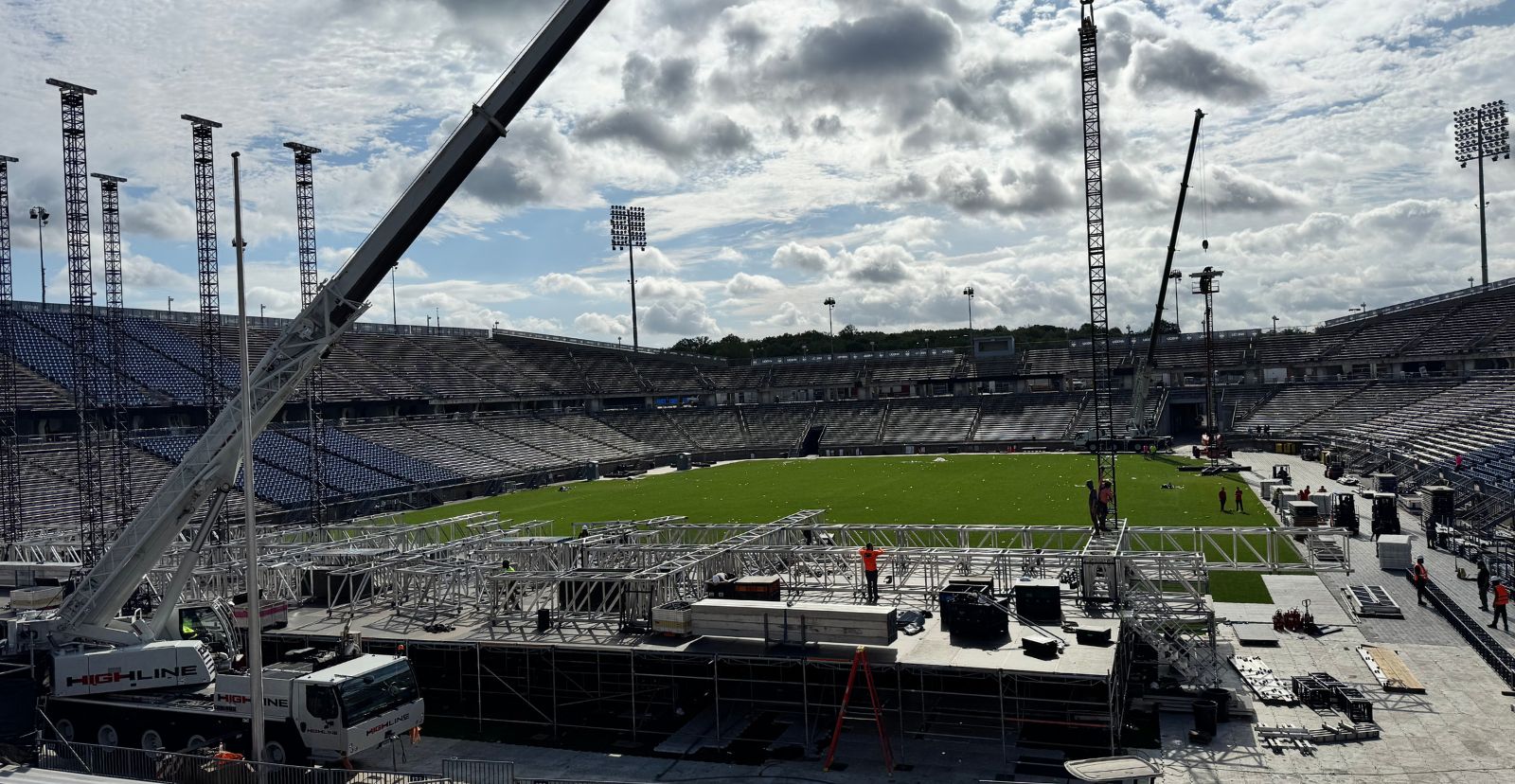
A multi-day festival or arena build. Typical crew: separate calls staffed across several days, loaders and pushers working continuously as trucks cycle, stagehands split across stages or zones, and strike planned as its own scheduled operation rather than whatever is left at the end.
Frequently Asked Questions
What is the difference between a stagehand and a loader?
A loader works the truck, unloading and packing it so gear comes off in the order the build needs and goes back in a way the next venue can use. A stagehand works the build itself: deck, cable, fixtures, and assembly. On a small call the same person may do both.
What is a pusher on a production crew?
A pusher moves cases between the dock and the stage. It sounds simple, and on a small load-in it is. In a convention center, arena, or stadium the push is long enough that dedicated pushers are what keep the build crew from spending the morning walking gear across a building.
Do stagehands need experience, or is it general labor?
Both exist on the same call. Some of the work is straightforward carrying and positioning. Some of it, like dressing cable properly or assembling structure other departments are about to build on, needs someone who has done it before. That is why calls are tiered rather than flat.
How long does a load-in take?
It depends on the size of the package, the venue's access, and how many departments work in parallel. The controlling factor is usually the load-in window itself. When the work does not fit the hours available, the answer is more crew working at once rather than a longer day.
Do I need stagehands if the venue has house crew?
Sometimes, and sometimes the venue requires you to use theirs. Rules vary by building, so confirm before you scope a call. Many productions run a mix of house crew and brought-in labor.
Are stagehands needed during the show, or only for load-in?
Usually both, at different sizes. The call is largest during load-in, smallest during the show, and back up for strike. Shows with scene changes or set moves need hands standing by through the program.
What is strike, and why is it a separate call?
Strike is the takedown after the show. It gets scoped separately because it happens at the end of a long day, usually on a clock, with a venue waiting to be handed back. Treating it as leftover crew from load-in is how out times get missed.
Can you staff a load-in and load-out on the same day?
Yes. Same-day in and out is common for corporate work and one-off shows, and it is scoped as two calls with the show in between rather than one long shift.