
What Does an Equipment Operator Do, and Do You Need One?
Direct Answer
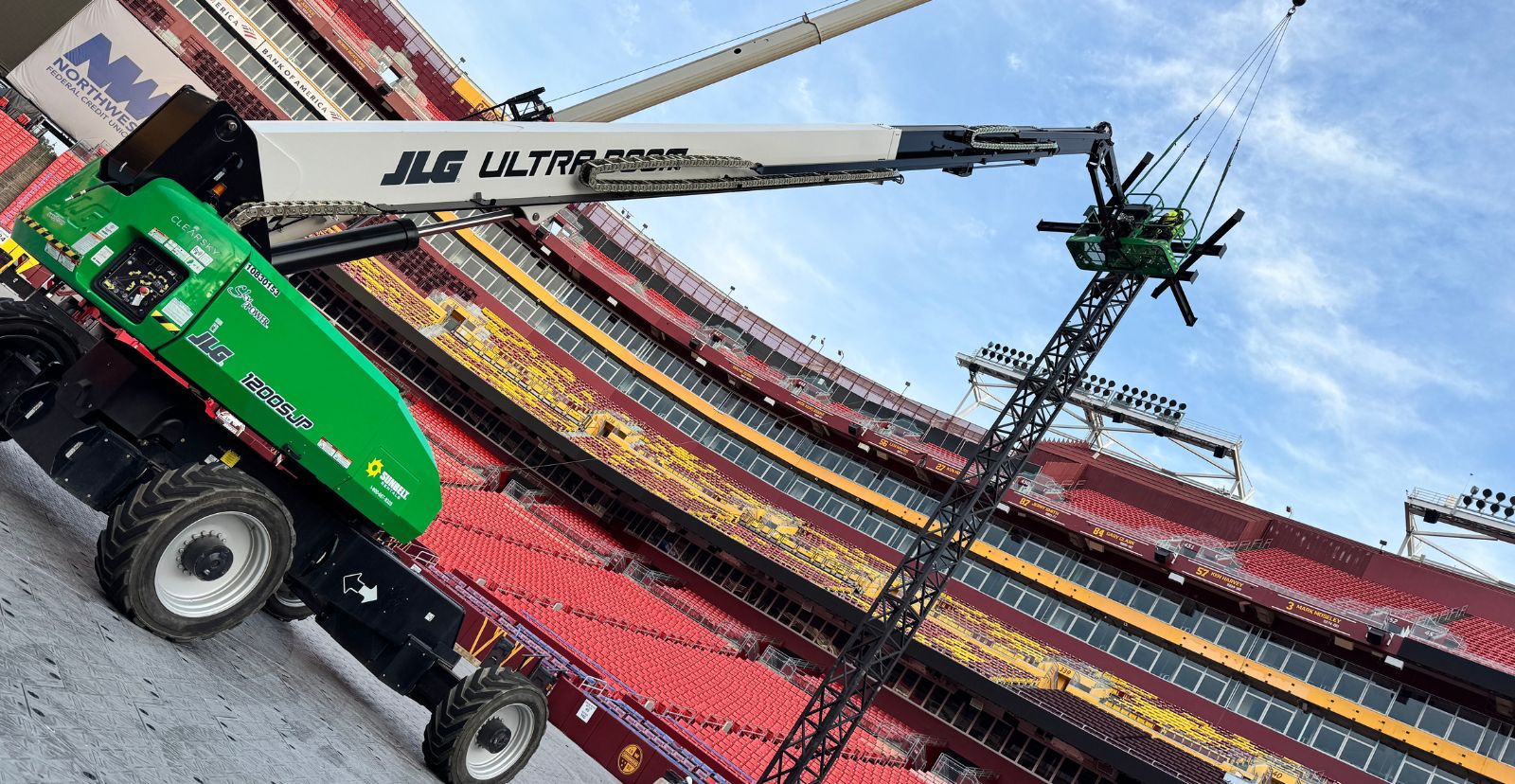
Equipment operators run the machines a build depends on: forklifts on the dock and across the site, boom and scissor lifts for work at height, and cranes for anything too heavy or too high for the rest of the crew to place. You need one when your load-in has a dock, anything heavy, or anything that has to be reached after the rig flies, and each machine needs its own certified operator. Each machine is its own position with its own training, and the operator is the only person on the call allowed to run it. Forklift operators are required by OSHA to be trained and evaluated before they operate. Aerial lift operators need lift-specific training. Crane operators carry their own certification, and most venues and general contractors will ask to see it before the crane moves. On a small load-in one forklift operator covers the whole job. On a stadium or festival build, equipment operators are a department.
Quick Decision Guide
| If your build involves... | Your call generally needs... |
|---|---|
| Trucks unloading at a dock with palletized or cased gear | A certified forklift operator working the dock |
| Moving heavy gear across a large site or outdoors | Forklift operators on the site, sometimes with rough-terrain machines |
| Focus, cabling, or fixture work after the rig flies | A boom or scissor lift with a trained operator |
| Setting roof systems, heavy video walls, or structure beyond a forklift's reach | A crane with a certified crane operator |
| A venue that controls its own dock equipment | Confirm whether house operators are required before booking your own |
Key Takeaways
- Each machine is its own position. A forklift operator, a lift operator, and a crane operator are three separate qualifications, not one person who is good with equipment.
- Operators are the only people who run the machine. A stagehand who has driven a forklift before is not a forklift operator on a call. Training and evaluation are the requirement, not experience.
- The venue will ask. Buildings, general contractors, and insurers commonly require operator documentation before equipment moves. Having it ready is what keeps the dock from stopping.
- Forklifts set the pace of load-in. On a build with a lot of cased or palletized gear, the forklift is the bottleneck. One good operator on the dock is worth several hands pushing.
- Cranes are scoped and scheduled separately. A crane pick is a planned operation with its own window, its own operator, and usually its own rigging crew.
Forklift, Lift, Crane: Three Machines, Three Tickets
Forklift operators work the dock and the site. Coming in, they pull pallets and heavy cases off the trucks and stage them where the build needs them. During the build they move the things too heavy for hands: motors, distro, cable reels, staging, LED wall crates. Going out, they reverse it. On outdoor sites this often means rough-terrain machines and a lot of ground to cover.
Boom and scissor lift operators put people at working height safely. After a rig flies, everything that needs adjusting is out of reach from the deck. Focus, cable dressing, fixture swaps, and troubleshooting all happen from a lift, and the lift needs someone trained to position it and to work from it.
Crane operators handle the picks that nothing else can: roof systems, ground support headers, heavy video walls, anything that has to go up past forklift height or over an obstacle. A crane pick is planned in advance, with the operator, a signal person, and riggers working together.
Why Certification Is the Whole Job
The reason these are positions and not tasks is that the training is what the venue is checking for. OSHA requires forklift operators to be trained, evaluated, and re-evaluated on a schedule. Aerial lifts carry their own training requirement. Crane operators hold certification through recognized programs, and the certification is specific to the type of crane.
None of this is optional on a professional site, and none of it can be substituted with someone who is confident. A dock that stops because an operator cannot produce a card is a load-in that is now behind.
How Equipment Fits Into the Sequence
Equipment runs ahead of the crew and alongside it. Forklifts work the trucks as they arrive, so the dock is usually the first thing moving on a load-in. Cranes work early in the build, setting structure before the departments need the space underneath. Lifts come into play after the rig is up, when the focus and adjustment work begins.
Scheduling equipment badly shows up as a crew standing around waiting for a forklift, or a lift that is needed in two places at once. Scoping the operators to the sequence is what keeps everyone else working.
Step-by-Step Guide
Dock First, Lifts Last
-
The site gets assessed. Dock height, floor load limits, door widths, ground conditions outdoors, and what the venue provides versus what has to come in. This decides which machines are needed and which are allowed.
-
Documentation gets confirmed. Operator training and certification are checked against what the venue or general contractor requires, before the day, not on it.
-
Forklifts work the dock. As trucks arrive, operators pull heavy and palletized gear and stage it in build order alongside the loaders.
-
Crane picks happen early. Anything going up by crane is set before the floor fills with crew and gear, on a planned window with riggers and a signal person.
-
The rig flies, and lifts take over. Boom and scissor lifts move in for focus, cable, and adjustment once the truss is at trim.
-
Equipment clears for the show. Machines get parked out of sight lines and out of egress paths before doors.
-
Strike reverses it. Lifts come first to get gear down, then forklifts on the dock as the trucks reload, with the crane on its own window if a pick is needed.
Examples
These are typical shapes for common jobs, not quotes from past projects.
A hotel ballroom with a freight elevator and no dock. Typical crew: no forklift at all, because the building cannot take one, so the call leans on pallet jacks, pushers, and a scissor lift with operator for the overhead work once the rig is up. Knowing this before the truck arrives is the whole game.
A theater concert with a flown rig. Typical crew: a forklift operator on the dock during load-in and load-out, and a boom lift with operator for focus and troubleshooting after the truss flies. No crane. Two short windows, one operator each.
An outdoor festival with a roof system and video walls. Typical crew: rough-terrain forklifts running continuously as trucks cycle, a crane and certified operator on a planned window to set the roof and the heavy walls, and lifts on each stage once the rigs are up. Equipment is a department with its own schedule.
Frequently Asked Questions
Do forklift operators need to be certified for event work?
Yes. OSHA requires forklift operators to be trained and evaluated before operating, regardless of the industry. Venues and general contractors commonly ask for documentation before a forklift moves on their site.
Can a stagehand drive the forklift if they have done it before?
No. Experience is not the requirement, training and evaluation are. An untrained hand on a forklift is a liability for the production and for the venue, and most sites will stop the dock if they see it.
What is the difference between a boom lift and a scissor lift?
A scissor lift goes straight up on a platform and is used where the work is directly overhead. A boom lift has an articulating or telescoping arm and can reach out and over obstacles. Both need a trained operator, and the choice depends on what is in the way.
When does an event need a crane?
When something has to go higher or heavier than a forklift can manage: roof systems, ground support headers, large video walls, or anything being set over an obstacle. Crane work is planned as its own operation with a certified operator, a signal person, and riggers.
Do I need to bring my own equipment, or does the venue provide it?
It varies. Some venues provide forklifts and require their own operators. Some allow outside equipment and operators. Some have no equipment at all. Confirm before scoping, because it changes both the machines and the crew.
How many forklift operators does a load-in need?
It depends on how many trucks are unloading at once and how far the gear has to travel. One operator on a single dock with a short push is common. A multi-dock or outdoor site with continuous trucks needs more, working in parallel.
Are equipment operators part of the stagehand call?
They are scoped alongside it but as their own positions, because the qualification is separate. An operator may also work as a hand when the machine is not needed, depending on the call.
What documentation should I have ready for the venue?
Operator training records and any certifications, current and specific to the equipment being used. Having them available before load-in morning is what prevents the dock from stopping.